
 Fa
Fa En
En
Category: Leather Manufacturing and Coating Industry
Introduction
As the name suggests, synthetic leather is an artificial leather-like fabric made using plastic materials such as polyvinyl chloride (PVC), polyurethane (PU), and nylon, designed to replicate the look and feel of natural leather—without using any animal-derived components in its structure.
Synthetic leather was first introduced in the 19th century in Germany, originally developed for military applications such as belts, gun holsters, boots, and bags. These early versions consisted of a paste-like layer covered with a polyurethane or polyester coating.
Today, synthetic leather typically comprises a polymer layer that mimics the texture and color of genuine leather, laminated onto a textile backing. This material is widely used in the production of various goods such as furniture upholstery, automotive interiors, clothing, bags, shoes, sports balls, and other consumer products.
What truly sets synthetic leather apart is the innovation behind its realistic leather-like appearance. Overall, the increasing use of synthetic leather across industries is largely driven by ethical considerations and its more affordable price point compared to natural leather.

Why Choose Synthetic Leather?
- Cost-Effective:
Synthetic leather is significantly more affordable than natural leather, making it a preferred option for consumers with budget constraints. - Versatility:
Due to the wide range of available colors, textures, and finishes during production, synthetic leather offers extensive customization options. - Durability:
High-quality synthetic leather demonstrates considerable resistance to abrasion, tearing, and moisture, making it suitable for products subjected to frequent use. - Ethical Production:
With growing awareness around animal welfare and environmental sustainability, synthetic leather offers a guilt-free alternative. It represents a step toward reducing demand for animal hides and promoting more sustainable manufacturing practices.
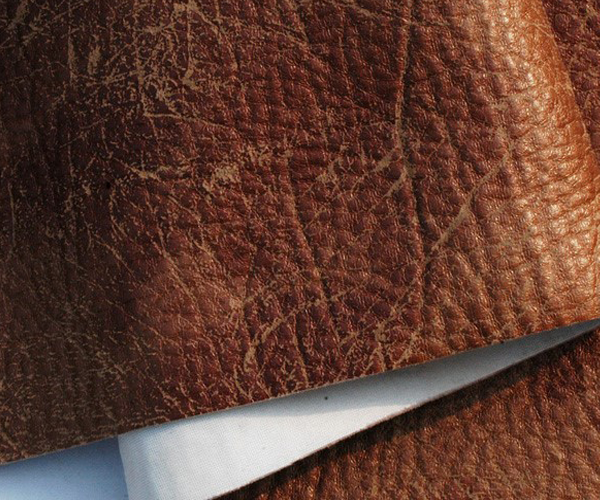

Synthetic Leather Production Process:
- Selecting Suitable Raw Materials
The production process of synthetic leather begins with selecting a suitable and high-quality polymer. The two most commonly used polymers in synthetic leather manufacturing are PU (polyurethane) and PVC (polyvinyl chloride). Polyurethane is a versatile polymer recommended for its durability, flexibility, breathability, and texture that closely resembles natural leather. On the other hand, PVC is a thermoplastic polymer that is cost-effective and offers excellent resistance to abrasion and tearing. The choice between these polymers depends on the specific needs of the consumer.

- Coloring:
The next step is selecting the color for the synthetic leather. Synthetic leather is available in a wide range of colors and is used as a versatile material for various applications. The coloring process involves adding pigments and dyes to the polymer layers. These pigments and dyes are mixed in the coating formula to achieve a uniform and vibrant color throughout the leather. Coloring can be done through different methods, such as directly adding pigments to the polymer mix or using digital printing techniques to create complex patterns on the synthetic leather surface. - Selecting Softeners:
Softeners improve the flexibility and softness of the synthetic material, preventing it from becoming hard or stiff, and give it a more natural texture. - Coating Process:
This process involves applying polymer layers onto a carrier surface, which is usually a type of release paper. These layers consist of polymers and additives, and their specific composition varies depending on the desired properties of the synthetic leather, such as flexibility, color, durability, or water resistance. Polymer layers are applied using methods such as blade coating, rollers, or spraying. After application, the polymer layers undergo curing via heat or chemical treatment to allow the coating to swell and reach the required thickness. - Bonding Polymer Foam to Fabric:
To provide stability and additional properties, polymer foam is often adhered to a backing material, which is usually a polyester fabric. The foam and fabric are bonded together primarily through rollers using adhesives with the application of heat and pressure. This fabric layer not only increases the durability and stability of synthetic leather but also adds comfort, especially when used in furniture or apparel production. - Embossing Process:
To achieve the precise texture and appearance of natural leather, synthetic leather is often subjected to embossing. This process creates grain patterns and textures on the leather surface, enhancing its visual appeal and tactile experience. During embossing, the coated fabric is pressed against a patterned roller or plate under heat and pressure. The roller or plate carries a pattern that transfers onto the synthetic leather. The embossing process can replicate various leather grain patterns such as smooth, pebbled, or reptile-like textures.
After synthetic leather materials go through these various production steps, the final stage involves finishing and ensuring the product’s quality. These steps include cutting, edge coloring, and performance testing.

After cutting, synthetic leather has raw or rough edges. To give the product a beautiful appearance, the edges are carefully colored. A skilled craftsman applies a specific edge paint using a brush or spray techniques that match the main color or coating. This step not only improves the appearance but also helps stabilize the edges of the leather and prevents wear or deterioration over time. Additionally, synthetic leather products may undergo performance tests for durability, strength, and usability. This process helps manufacturers identify weaknesses and take necessary actions to improve the quality and longevity of the product.
In general, synthetic leather is industrially produced using two types of polymer coatings: PU and PVC, through different methods.
PU Leather Production Process:
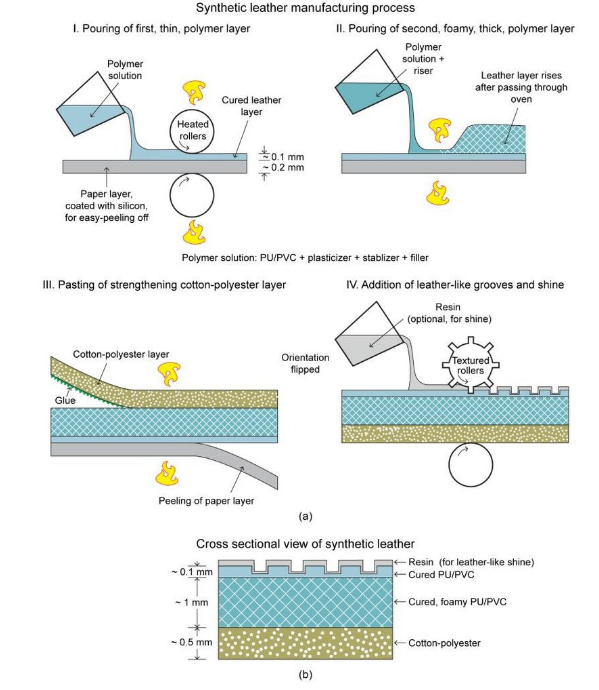
PU leather production is now well established and used worldwide across various industries. The production process of PU leather is divided into four main stages:
- The first stage involves pouring the polymer solution onto a carrier substrate, which is often made of silicone-coated release paper. The mixture is passed between heated rollers to compress and even out the layer.
- The second stage involves pouring a foaming agent onto the polymer coating, then passing the entire mixture into a heated oven, which causes the polymer layer to swell or foam.
- The third stage involves bonding a fabric layer made of a cotton-polyester blend onto the polyurethane foam using an appropriate adhesive, which increases strength and durability. In this stage, the paper substrate that served as the carrier for the polymer coating is separated from the leather composite by heat.
Using the appropriate adhesive, leather pieces can be glued together to create strong and durable joints. These joints can withstand pressure, stretching, and other common stresses in various applications.
In the past, solvent-based adhesives made from polychloroprene or polyurethane were used in the production process of polyurethane synthetic leather. These adhesives often consisted of polymers dissolved in a solvent. When the adhesive was applied, the solvent would evaporate, leaving behind the sticky material that formed the bond between surfaces.
However, nowadays, to ensure the health and safety of both producers and consumers, and to reduce environmental impact, the use of water-based adhesives has been steadily increasing in the global market. Water-based adhesives are environmentally friendly and have low volatile organic compounds, making them a suitable alternative to solvent-based adhesives. These adhesives do not pose significant health risks and do not emit toxic or unpleasant vapors.
Water-based polyurethane adhesives are made by dispersing polyurethane prepolymers and additives in water. These adhesives are suitable for porous and non-porous surfaces and are activated by applying pressure and heat. Water-based polyurethane adhesives are environmentally compatible and maintain the health of both consumers and manufacturers. Additionally, their non-flammability during storage and transport, the absence of hazardous waste production, and the ease of cleaning production line equipment are other prominent features of these adhesives. Also, having a higher solid content than solvent-based adhesives and forming strong and durable bonds ensures reliable adhesion and long-lasting durability. Their ease of use, optimal consumption, and resistance to hardening or yellowing over time have made them a preferred choice in the synthetic leather industry. This product is available in different heat resistance grades depending on the application.
- The fourth stage involves applying a polyurethane coating on the surface of the leather, then passing it under a press to create leather-like grooves and a glossy finish.

Applications of PU Leather
PU (polyurethane) leather is a versatile material used across various industries due to its durability, low cost, and ethical considerations. Here are some common applications:
Fashion and Apparel
- Clothing: Jackets, skirts, pants, and other garments benefit from the look and feel of leather without the high cost.
- Footwear: Shoes, boots, and sandals often use PU leather for its durability and aesthetic appeal.
- Accessories: Belts, handbags, wallets, and watch straps are frequently made from PU leather because of its versatility and wide range of available finishes.
Automotive Industry
- Upholstery: PU leather is commonly used for car seats due to its luxurious look and feel as well as its cost-effectiveness.
- Dashboards and Panels: PU leather is also used in interior trims of vehicles to create a high-quality surface.
Furniture and Upholstery
- Sofas and Chairs: PU leather is widely used in furniture manufacturing, offering a stylish and attractive appearance.
- Office Furniture: Office chairs and other office furniture often use PU leather for durability and a professional look.
Consumer Goods
- Book Covers: PU leather provides a durable and attractive cover for notebooks and planners.
- Phone Cases: Many phone cases are made from PU leather, offering both protection and style.
- Bags and Luggage: Travel bags, backpacks, and suitcases often use PU leather due to its durability and visual appeal.
Sports and Outdoor Equipment
- Sports Goods: Items like footballs, gloves, and protective gear may be made from PU leather because of its durability and performance.
- Outdoor Furniture: PU leather is used in outdoor chairs and furniture because it resists weather conditions and abrasion.
Decorative Items
- Wall Coverings: PU leather can be used in decorative wall panels to provide a chic and luxurious look.
- Home Decor: Various decorative items such as cushions and throws may use PU leather to add style.

PVC leather is a type of synthetic leather made from polyvinyl chloride (PVC). PVC is a polymer material widely used in various applications such as pipes, cables, and flooring. PVC is durable, flexible, and cost-effective, and it can be easily shaped and molded into different forms such as sheets, pipes, or rods. PVC leather is produced by two main methods:
.casting and calendaring
PVC Leather Production by Casting (Using a Release Paper Method)
- Cast PVC leather is made by dissolving PVC powder with plasticizers, colorants, fillers, and other additives using a solvent. The prepared mixture is then coated onto a substrate made of release paper. In the next step, the coated substrate passes through a heated oven at a specified temperature. Under these conditions, the foaming agent in the PVC layers activates with heat exposure, causing the PVC to foam. Depending on the desired thickness of the final product, sometimes the foaming step can be skipped, moving directly to the next step.
- In the following step, the foamed PVC is separated from the paper substrate and adhered to a backing fabric using a special adhesive. Finally, to create an attractive visual effect, the manufacturer passes the leather through embossing rollers that imprint patterns onto the surface of the PVC leather.

PVC Leather Production by Casting (Using a Release Paper Method)
- Cast PVC leather is made by dissolving PVC powder with plasticizers, colorants, fillers, and other additives using a solvent. The prepared mixture is then coated onto a substrate made of release paper. In the next step, the coated substrate passes through a heated oven at a specified temperature. Under these conditions, the foaming agent in the PVC layers activates with heat exposure, causing the PVC to foam. Depending on the desired thickness of the final product, sometimes the foaming step can be skipped, moving directly to the next step.
- In the following step, the foamed PVC is separated from the paper substrate and adhered to a backing fabric using a special adhesive. Finally, to create an attractive visual effect, the manufacturer passes the leather through embossing rollers that imprint patterns onto the surface of the PVC leather.
PVC Leather Production by Calendaring
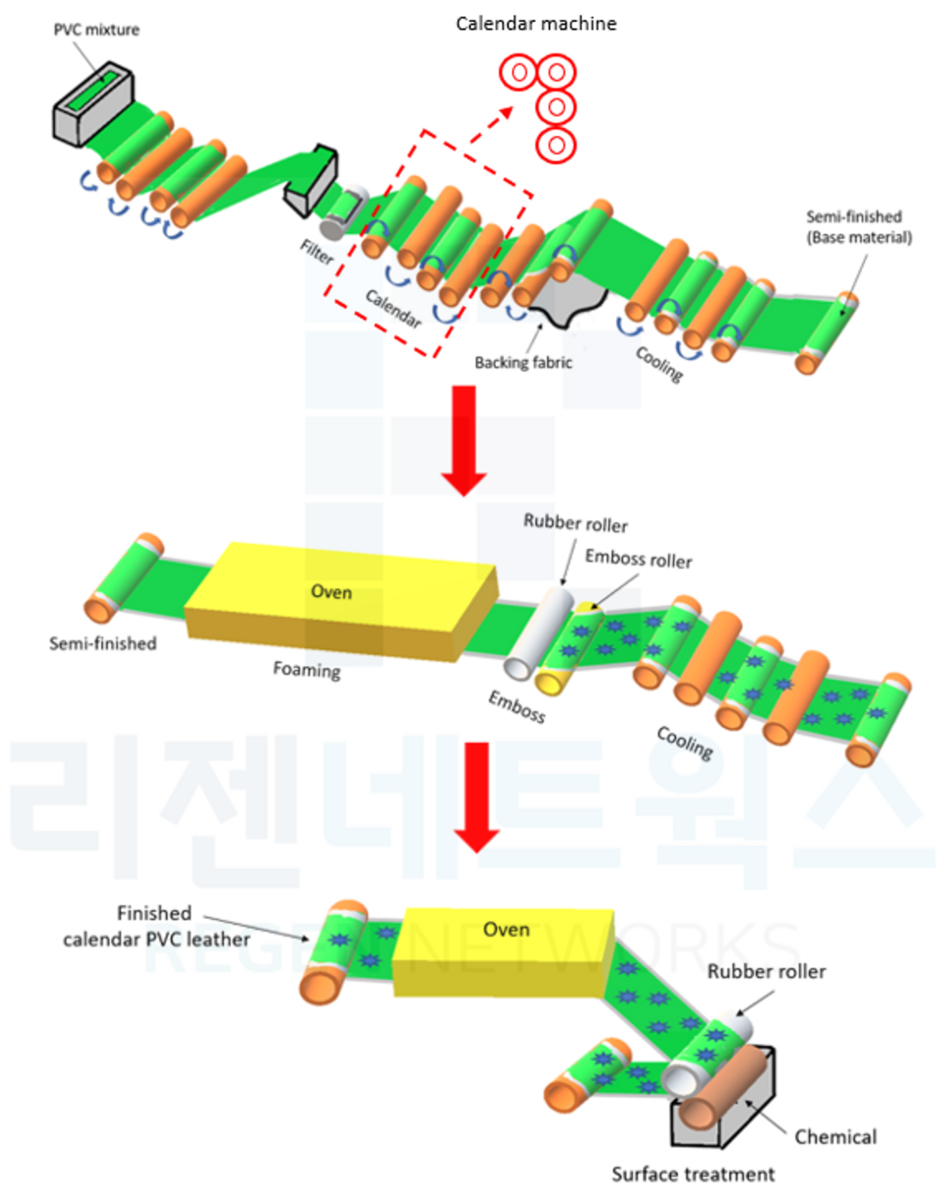
- The calendaring process starts by mixing PVC powder, plasticizers, colorants, and other materials in an extruder, where the mixture melts in a mixer mill. Then, layers of PVC are coated onto a backing fabric; this structure is called semi-finished leather (or base material).
- Next, the semi-finished leather passes through an oven at a specified temperature to thicken the PVC layers and create a foamed texture. Finally, the finished leather is embossed with desired patterns by passing it through patterned rollers.
Advantages of the Casting Process Compared to Calendaring in PVC Leather:
- Softer Feel:
In the casting process, solvents such as toluene, xylene, and cyclohexanone are commonly used to dissolve the PVC resin. These solvents allow for a more uniform application of PVC onto the backing fabric, resulting in a leather that is softer and more flexible compared to the calendaring process. - Better Texture:
The casting process allows for more precise control over the texture and surface patterns of the PVC leather, leading to higher quality. - Greater Durability:
PVC leather produced by casting usually has stronger interlayer adhesion, making it more durable and resistant. - Better Heat Resistance:
Due to stronger interlayer bonding, cast PVC leather can withstand higher temperatures without deformation, making it suitable for applications exposed to heat. - More Versatile Applications:
The flexibility and softness of cast PVC leather make it ideal for more complex uses such as automotive upholstery and furniture.
The main difference between PVC casting and calendaring lies in the materials and production process
Because the casting process uses many chemicals to dissolve the PVC powder, the final synthetic leather has a softer feel compared to calendared leather. Additionally, cast PVC products have higher production costs due to the need for release paper, chemicals, and adhesives in the casting process, making them more expensive than calendared PVC.
Differences Between PU and PVC Leather:
- Structure:
PU leather and PVC leather differ structurally. PVC has more layers beneath its surface coating, making it harder and more durable. On the other hand, PU has fewer layers, which makes it more flexible and softer. PU leather can even have wrinkles and stains similar to natural leather, whereas PVC leather resists abrasion and harsh weather conditions better. - Breathability:
Due to the foam layer under its surface and skin layer, PVC leather is much less breathable than PU. This gives PU an advantage in applications where wearable materials are preferred. However, since PU leather has more pores on its surface, it is more prone to absorbing stains and unwanted particles. For this reason, furniture is often made from PVC leather. - Durability:
The multi-layer structure and lack of pores in PVC leather make it more durable compared to PU leather. Therefore, PVC leather is more commonly used in furniture and footwear. Using PVC leather can also lead to a longer product lifespan. - Environmental Compatibility:
PU leather is generally more environmentally friendly because it does not contain chlorine and decomposes more easily. PVC leather involves the use of chlorine, which can release harmful dioxins and takes longer to break down.


No comments