
 Fa
Fa En
En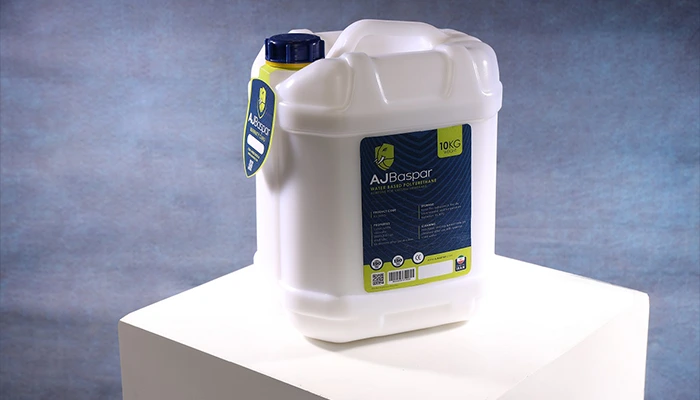
What is polyurethane adhesive
Introduction to Water-Based Polyurethane Adhesives
Polyurethanes (PUs) are a diverse class of polymer materials that can be used in various adhesives and coatings. These materials have gained significant attention due to their strong bonding capability, durability, and high peel strength. PU-based adhesives exhibit excellent resistance to temperature and humidity variations.
In the following sections, we’ll explore the diverse properties of these adhesives, along with their advantages and limitations for use in different fields
Advantages and limitations of Polyurethane Adhesives
| advantages | limitations |
|
High Strength and Durability Variable Curing Time High Flexibility at Low Temperatures Excellent Solvent Resistance Wear and Corrosion Resistance |
Primer Requirement Low Heat Resistance Limited Shelf Life If there is an empty spot on the surface without adhesive, the bonding strength can be compromised |
Types of Polyurethane Adhesives
Polyurethane adhesives come in various forms. There are one-component and two-component adhesives, both based on similar chemical principles. Additionally, there are hot melt adhesives. Each type has its advantages, disadvantages, and diverse applications.
| industry | Description |
| Wood
|
Polyurethane adhesives used in the wood industry, such as bonding wood to wood, PVC to wood, and wood veneering, must possess at least one of the following high-performance features: durability, transparency, and resistance to heat and moisture |
| shoes | The shoe industry is one of the sectors where final products are exposed to various weather conditions, making their usage quite challenging. Additionally, the materials used in shoe production are highly diverse. Therefore, the adhesive required in this industry must have exceptional durability to withstand tough usage conditions. |
| transportation | Polyurethane adhesives offer a suitable solution for the ever-increasing demands and constraints of the transportation industry. These adhesives provide exceptionally strong and durable bonds on various surfaces, even in challenging weather conditions (high temperatures, humidity, exposure to cleaning agents, and different chemicals) |
| Sealants | Polyurethane sealants are used for protecting glass, sanitary sealants, and automotive applications. They are required to withstand tough conditions, exhibit excellent adhesion to various surfaces, and resist chemicals and moisture |
| Non-Woven Textiles | Due to their exceptional bonding properties on various surfaces, polyurethane adhesives allow the formulation of adhesives with outstanding adhesion for non-woven textiles |
| Flexible packaging |
Polyurethane adhesives used in flexible packaging demonstrate good adhesion to various surfaces, including plastic films, aluminum, and paperboard. These adhesives are particularly suitable for applications where heat and moisture resistance, transparency, and resistance to yellowing are required. Furthermore, when using these adhesives, there is no release of toxic amines into the environment.
|
Polyurethane Adhesives are typically two-component systems that chemically bond two surfaces together. These systems consist of a resin component (the adhesive) and a hardener component. Both components must be mixed in specific proportions. The exact ratios vary depending on the specific adhesive formulation.
Water-based polyurethane adhesives are divided into different hardness grades. They are designed to withstand high tensile forces and require excellent tensile strength. Additionally, they exhibit high resistance to weathering and maintain their adhesive properties over time due to their cohesive structure.
The chemical combination of these adhesives involves a reaction between a polyisocyanate component and a polyol component. This reaction forms a strong network within the adhesive. Water-based polyurethane adhesives can easily cure at room temperature and are commonly used in situations where surfaces are sensitive to heat or are too large for heat application
One-component polyurethane adhesives
These adhesives are composed of a single component. Initially, they form a film and have a rapid curing process. Once dried, they maintain their elastic properties. The formulation of these materials involves blocking diisocyanatos, which are released upon application and heat for curing. This reaction creates a strong polyurethane network, ultimately resulting in adhesive properties .
Hotmelt Adhesives are typically composed of thermoplastic polymers. This means that these adhesives melt upon heating and can be used in their molten state. As the temperature decreases, they solidify and adhere to surfaces. Unlike one-component and two-component adhesives, hotmelt adhesives do not require surface porosity for bonding because their adhesion reaction is not chemical in nature. Instead, they adhere when they dry and undergo a physical change.
Existing standards for the use of polyurethane adhesives are as follows:
In some applications of polyurethane adhesives, such as sports adhesives and cabinet door lamination, the adhesives are exposed to unfavorable temperature and humidity conditions. Therefore, the following categories are used to standardize these adhesives.
| D1 | Adhesives that are resistant to a minimum pressure force of 10 MPa in dry weather conditions |
| D2 | Adhesives that are initially submerged in water at 20°C for 3 hours, then dried, and must withstand a minimum force of 8 MPa |
| D3 | Adhesives used for external building doors and windows must undergo a 4-day immersion in water. Before immersion, they should withstand a minimum force of 10 MPa, and in a wet state, a minimum force of 2 MPa. After drying, they should maintain a minimum force resistance of 8 MPa |
| D4 | Adhesives that even under very harsh conditions exhibit high resistance, such as adhesives used in sanitary equipment, shipbuilding, and building facades. These adhesives must be immersed in boiling water for 6 hours and then dried. In this regard, these adhesives should withstand a minimum force of 10 MPa in the initial state, a minimum force of 4 MPa in wet conditions, and a force of 8 MPa after drying |


No comments